
Hyundai’s Advanced Driving Simulator Turns Months of Testing into Hours
Hyundai Motor Group is changing the way new vehicles are developed with an advanced driving simulator capable of turning months of physical testing into hours of high-precision virtual validation.
Located at Hyundai and Kia’s Namyang Research and Development Centre in South Korea, the high-fidelity simulator allows engineers to assess different vehicle settings before physical prototypes are built. By testing and comparing configurations in a controlled virtual environment, development teams can make faster decisions while continuing to focus on vehicle performance, ride quality and refinement.
For drivers exploring the latest vehicles at Tynan Hyundai Kirrawee, the technology offers a fascinating look behind the scenes at the engineering processes helping to shape future Hyundai models.
Why Hyundai Is Expanding Virtual Vehicle Testing
Modern vehicle development is becoming increasingly complex. Engineers are now working across petrol, hybrid and electric powertrains, advanced software, driver-assistance systems and emerging autonomous-driving technologies.
Physical testing remains an important part of vehicle development, but it can require multiple prototypes, extensive track time and the right weather or road conditions. Hyundai’s simulator allows more of the early validation process to take place virtually, helping engineers identify promising settings before moving to physical prototypes and proving-ground tests.
Hyundai Motor Group has been developing its proprietary virtual validation platform since 2014. The need for flexible digital testing became particularly clear during the COVID-19 pandemic, when international travel restrictions disrupted overseas testing programs and demonstrated the limitations of relying entirely on physical validation.
The new facility was completed after approximately 10 months of construction and can support collaboration across Hyundai and Kia’s global research and development network.
Inside Hyundai’s High-Fidelity Driving Simulator
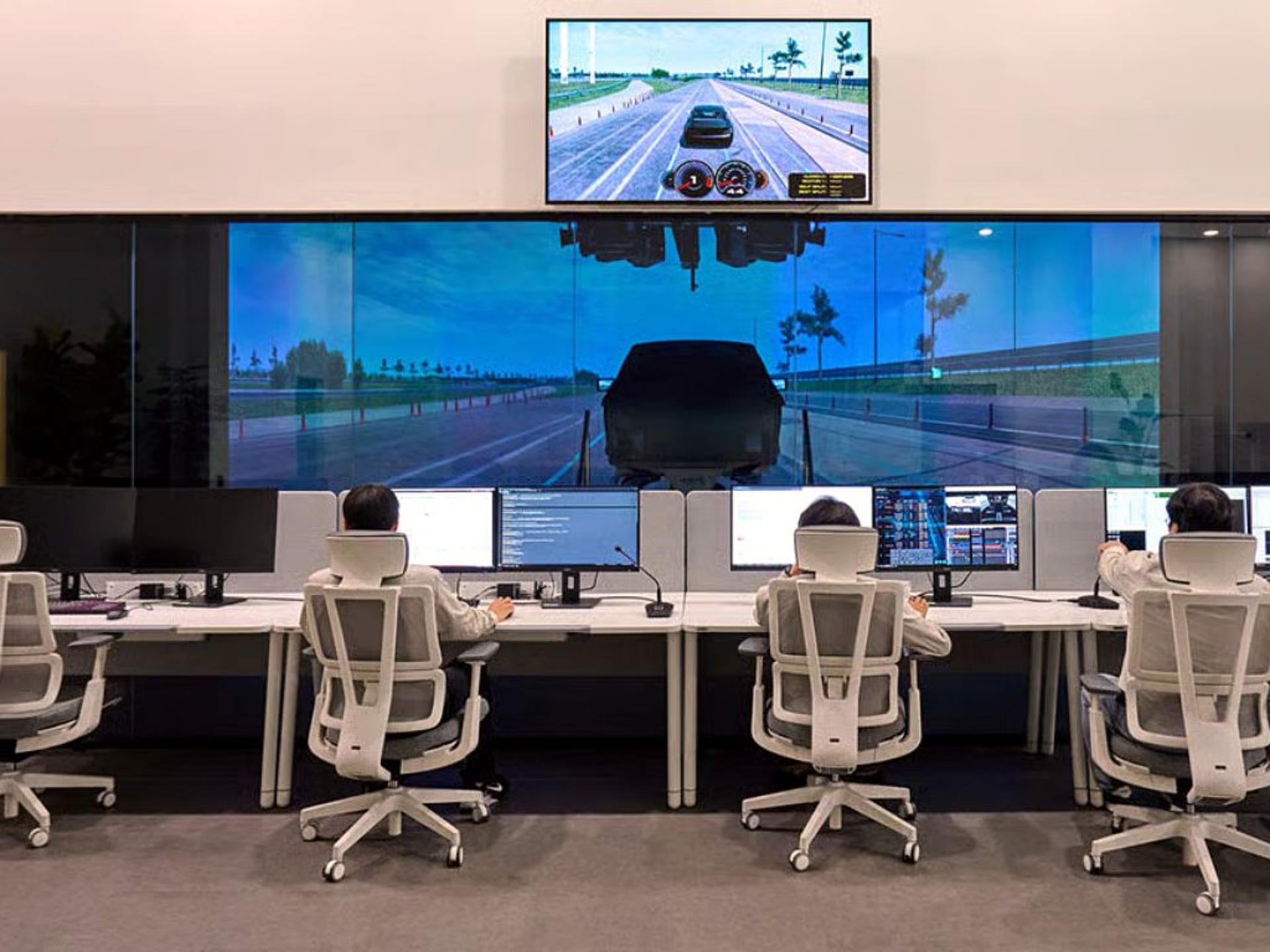
The simulator is designed to give engineers a highly realistic impression of how a vehicle responds on the road.
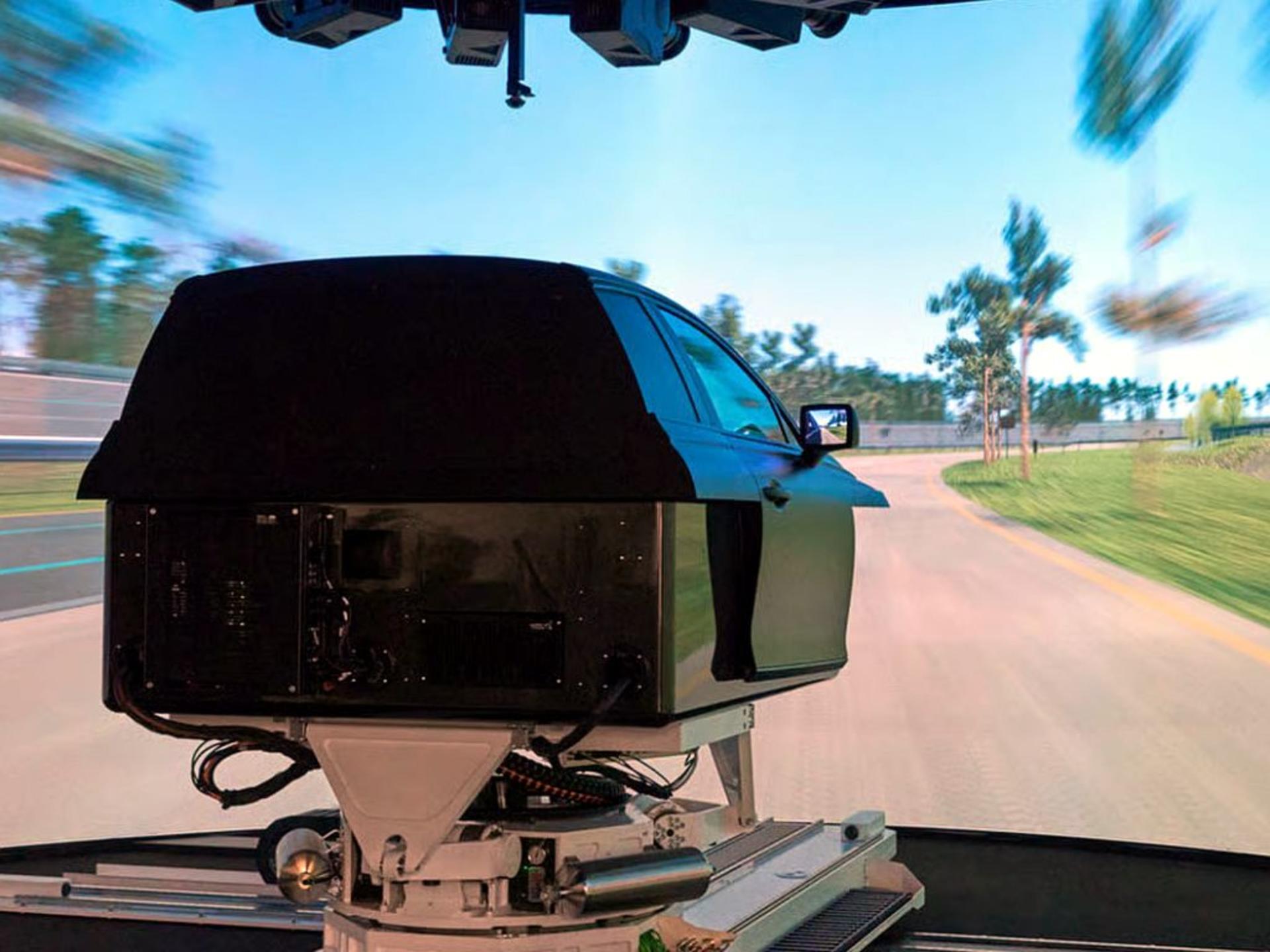
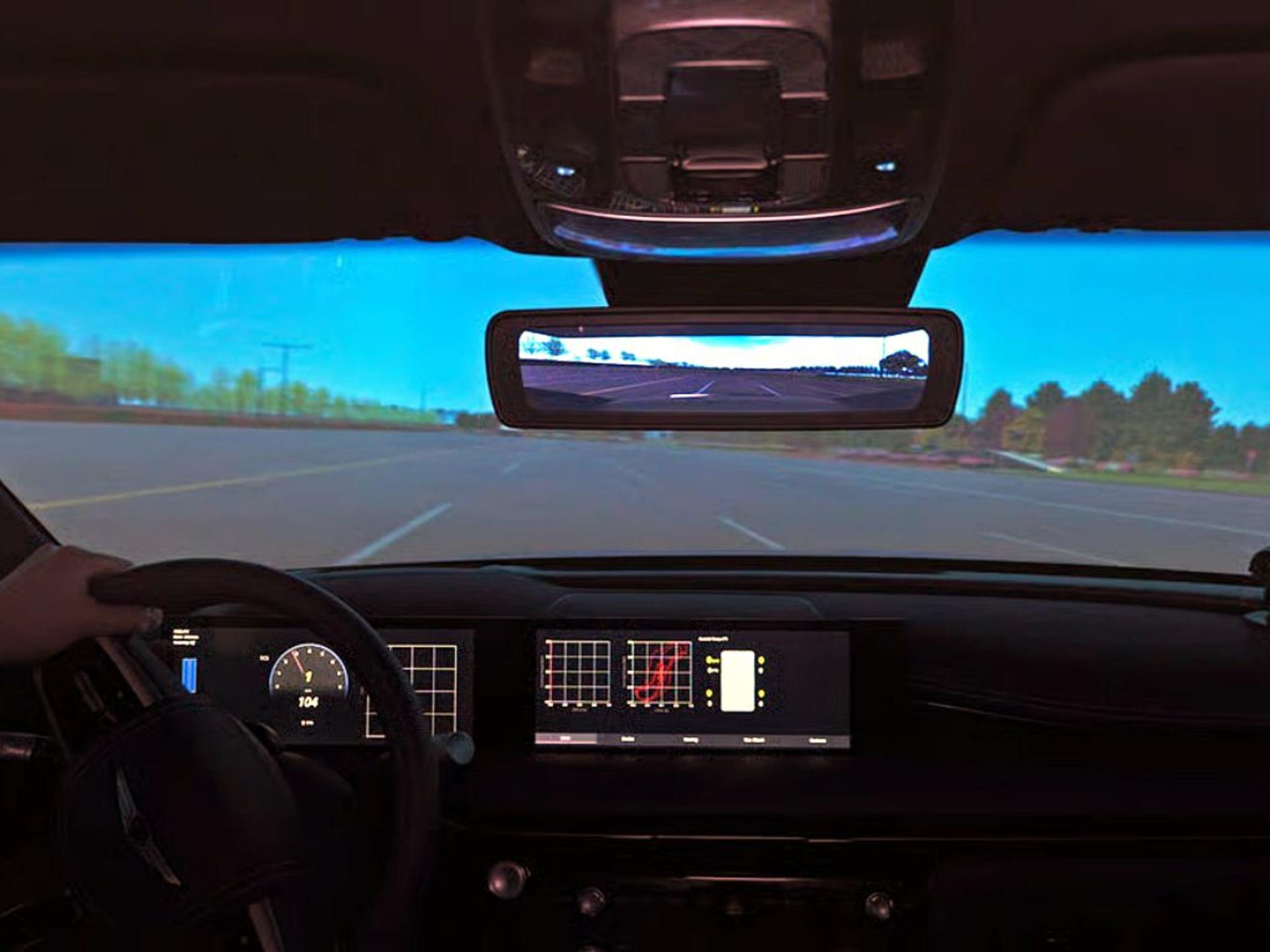
Its visual system uses a 270-degree curved projection screen, nine 4K projectors and a refresh rate of 240Hz. This creates a detailed virtual environment around a carbon-fibre cockpit fitted with production-style seating, steering wheel and pedals.
Beneath the cockpit is a six-degrees-of-freedom motion platform. It can reproduce longitudinal, lateral and vertical movement as well as roll, pitch and yaw, helping engineers assess how changes to a vehicle affect its behaviour.
Road-surface vibration can be recreated at frequencies of up to 40Hz, allowing development teams to study suspension performance, ride comfort and tyre behaviour without leaving the laboratory.
A Digital Replica of Hyundai’s Namyang Proving Ground
Realistic motion is only one part of the simulator. The virtual road itself must also accurately reproduce the surfaces engineers would encounter during physical testing.
To achieve this, Hyundai digitally mapped the Namyang proving ground at one-millimetre intervals. The resulting model captures fine details such as surface texture, gradients, bumps and drainage features, creating a one-to-one digital replica of the test facility.
Hyundai’s proprietary terrain-server technology helps manage the enormous amount of data involved. Instead of loading an entire road network at once, the system streams the section immediately surrounding the virtual vehicle.
Terrain data can be refreshed in less than one second, helping deliver detailed graphics and continuous simulation over long virtual distances without requiring the entire environment to be loaded simultaneously.
Faster Comparisons and Better-Informed Decisions
One of the simulator’s key advantages is the ability to change vehicle parameters in real time.
Engineers can compare different suspension calibrations and other settings back-to-back, making it easier to identify how each adjustment changes vehicle behaviour. They can also reproduce wet-weather scenarios without waiting for suitable track conditions.
This immediate comparison helps shorten the decision-making process. Instead of manufacturing a new prototype for every calibration change, engineers can assess multiple options virtually and direct physical testing towards the most promising configurations.
The simulator is already supporting the development of Hyundai and Kia passenger vehicles, Hyundai N products, Genesis Magma performance models and motorsport programs. Its virtual environments can also help prepare vehicles for testing at demanding locations such as Germany’s Nürburgring.

Supporting Hyundai’s Next Generation of Vehicles
Hyundai expects the simulator’s role to expand beyond traditional vehicle-dynamics testing. Future applications could include autonomous-driving validation, artificial intelligence-assisted development and broader physical-AI research.
As vehicles become increasingly electrified and software-driven, virtual engineering tools can help teams evaluate more scenarios earlier in the development process. This does not remove the need for real-world testing; instead, it allows physical prototypes and track programs to be used more efficiently.
For customers, the ultimate goal is straightforward: support the development of better-resolved vehicles by giving engineers more time and more precise information when refining how they perform.
See how Hyundai’s latest engineering is reflected across today’s range at Tynan Hyundai Kirrawee.
Experience Hyundai at Tynan Hyundai Kirrawee
From virtual validation in South Korea to real-world driving in the Sutherland Shire, Hyundai’s investment in advanced engineering continues to influence the vehicles customers experience today and in the future.
Visit Tynan Hyundai Kirrawee to learn more about the Hyundai range and our sales, service and customer-support options in Kirrawee and the Sutherland Shire.